
Nail Rhinestones Wholesale: A Buyer's Guide for Beauty Supply Businesses
If you source nail rhinestones wholesale for a beauty supply business, the decision comes down to five things: stone material, cut precision, size accuracy, backing type, and a supplier who can hold consistency across repeat orders. This guide walks through each one so you can buy with confidence and stock what salon clients actually ask for.
Why nail rhinestones deserve shelf space
Rhinestones are one of the highest-margin, lowest-shipping-weight accessories a beauty supply store can carry. A single assortment of flatback crystals serves nail technicians, nail art hobbyists, and DIY crafters at once. The catch is that quality varies sharply between suppliers, and a bad batch does more damage than a missed sale: loose stones, dull facets, and inconsistent sizes turn into customer complaints and returns.
Buy for consistency, not just the lowest unit price. A slightly higher per-stone cost with tight size tolerance and a reliable adhesive backing will always outperform a cheap assortment that sheds stones after a week.
The buyer's specification checklist
Before you request a quote, write down the specification you expect. Sharing a clear spec with a supplier is the fastest way to get a comparable price and to avoid the common trap of comparing unlike products. Use this checklist as your starting point.
Material
Glass-based crystal is the standard for nail use: it delivers strong refraction at a manageable price. Resin or acrylic stones are lighter and cheaper but scratch and cloud faster. Confirm the material before you compare prices.
Cut and facets
Look for clean, even facets with a sharp table and no cloudy centers. Faceting is what creates sparkle; a poorly cut stone looks flat under salon lighting even when the glass itself is good.
Size accuracy
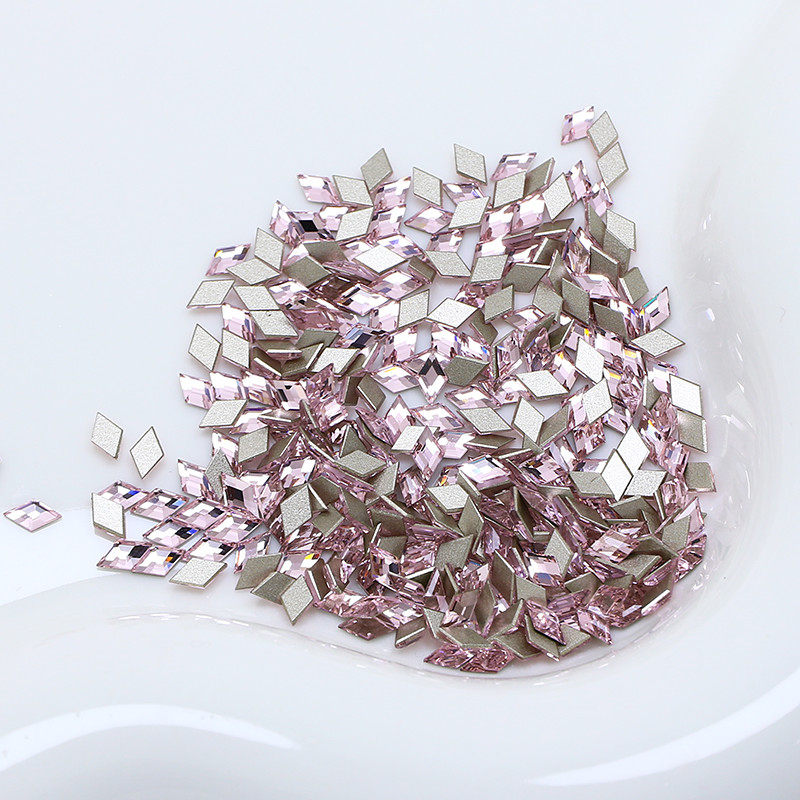
Stones are sold by millimeter, commonly from 1.5 mm to 6 mm and above. Ask for the actual size tolerance, not just the nominal size, because a bag labeled 3 mm should not contain a mix of 2.5 mm and 3.5 mm pieces.
Shape and color
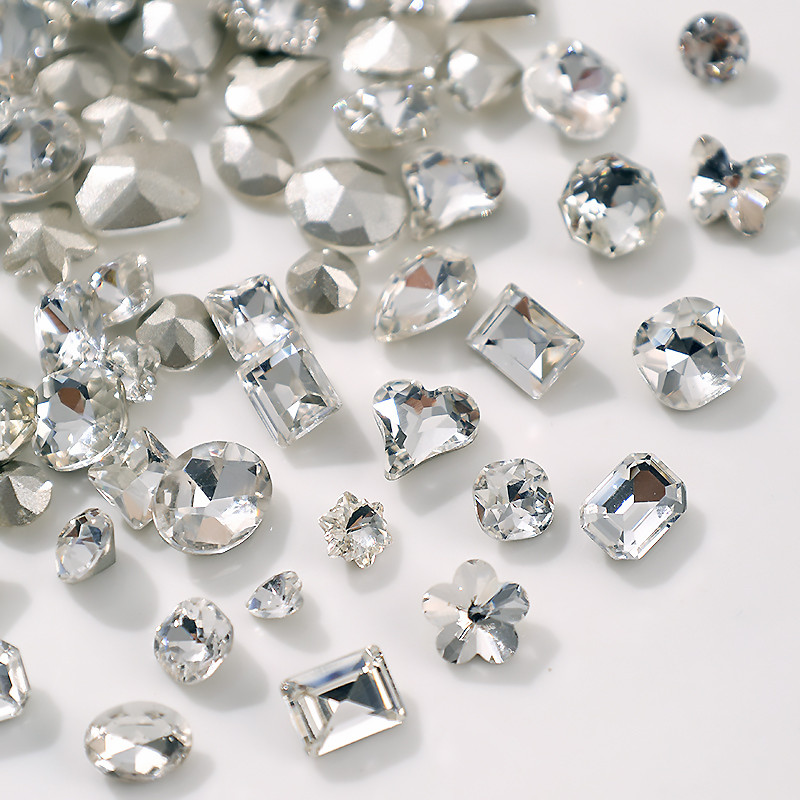
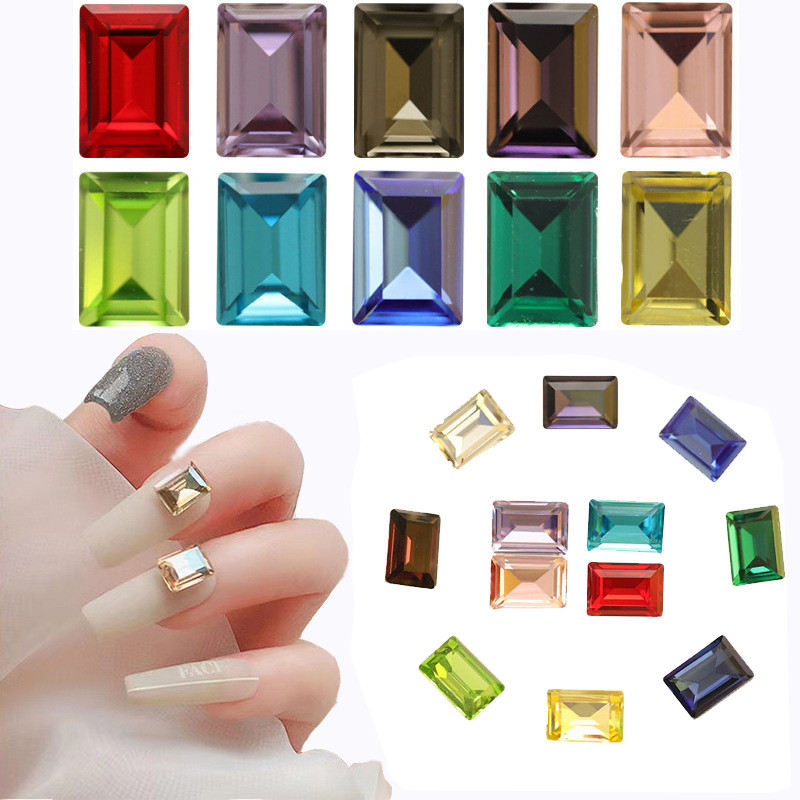
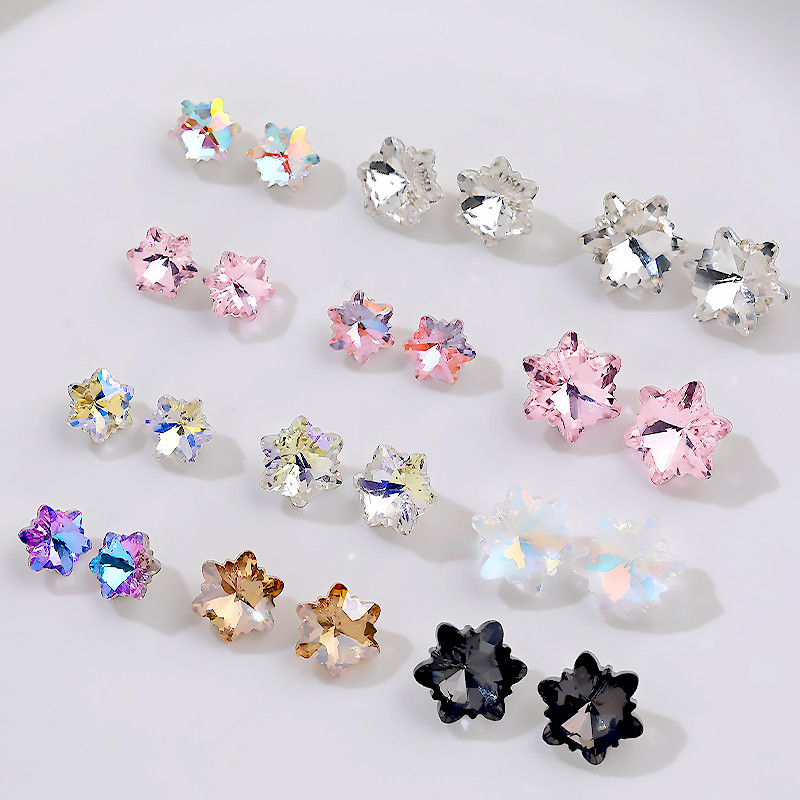
Rounds, squares, rectangles, hearts, teardrops, and stars cover most demand. Stock a neutral core (clear, AB, black) plus a seasonal accent color. AB and iridescent finishes sell especially well for nail art.
Reading quality: what separates a good stone from a cheap one
Photographs can be flattering, so judge a sample by how it behaves rather than how it looks in a catalog image. Tip a few stones onto a dark surface and inspect them under a bright light. Consistent pieces will share the same cut, color, and thickness, with clean edges and minimal glue residue on the flat back.
Press a stone onto a clear nail tip with standard gel adhesive and cure it. Then gently flex the tip. A well-made flatback stone stays seated; a poorly finished one lifts at the edge. Do this with several colors, because coating quality can differ within one assortment.
Flatback, hotfix, and non-hotfix: choosing the right backing
The backing determines how your customers use the stone. Flatback rhinestones have a smooth, uncoated reverse side and are applied with gel, glue, or resin — this is the dominant format for nail art and the safest choice for general resale. Hotfix stones carry a heat-activated adhesive layer and are applied with a heated wand; they suit garment and craft applications more than nails. If you sell mainly to nail technicians, build your core range around flatback stones and only add hotfix when you have a clear demand for it.
A five-step sourcing workflow
Turning a first inquiry into a dependable supply line is mostly a matter of following the same steps every time. This is the workflow we recommend to new buyers.
Define your range
List the shapes, sizes, colors, and backing types you want to stock, with a target price band for each. Separate your must-have core assortment from experimental additions.
Request samples first
Order a small sample assortment from two or three suppliers and compare them side by side. Check size consistency, facet clarity, and adhesive behavior before talking about volume.
Confirm the specification in writing
Get the material, size tolerance, color finish, and packing quantity confirmed in the quote. A written spec is what protects you when a later batch drifts.
Start with a trial order
Place a modest first order and inspect it on arrival. Track how it sells and whether any customer reports quality issues before you commit to a larger run.
Standardize and reorder
Once a specification proves itself, keep the same reference code on every reorder. Consistent SKUs make restocking fast and keep your shelves predictable.
For buyers who want a tailored format, our crystal diamond customization page explains how custom shapes, sizes, and finishes are handled.
Packaging, MOQ, and lead time
Bulk rhinestones are usually packed in loose bags or sorted trays. Loose bags are cost-efficient and suit high-turnover colors; sorted trays cost more but save counting time and reduce mixing at the point of sale. Ask about the minimum order quantity for each pack format and whether mixed-color assortments are allowed within one MOQ — this flexibility often matters more than a small unit-price difference.
Lead time is the other number to pin down. Standard sizes and colors are typically faster to replenish than custom cuts or specialty coatings. If you run a retail store, align your reorder point with the realistic lead time plus a safety margin, rather than ordering only when a shelf is empty.
Frequently asked questions
What size rhinestones sell best in a beauty supply store?
Small sizes in the 2 mm to 4 mm range move fastest because they work for everyday nail art and can be used in larger quantities. Keep a few larger statement sizes in stock for accent designs, but build your core inventory around the smaller, fast-turning pieces.
Are AB rhinestones worth stocking?
Yes. AB and iridescent finishes catch light across multiple colors and are a consistent favorite for nail art. They usually command a higher retail price than plain clear stones, which helps margin.
How do I store bulk rhinestones?
Keep them in sealed, clearly labeled containers away from moisture and direct sunlight. Separate sizes and colors so staff can restock quickly, and avoid mixing batches of the same code from different orders.
Can I order a custom shape or color?
Custom shapes, sizes, and coatings are possible, but they normally require a higher minimum order and a longer lead time than standard stock. Start with standard items to prove demand, then move a proven seller into a custom specification.
Where to go next
Once your specification is settled, browse the product catalog by group to see how rhinestones fit into the wider crystal range, or read more buying guides on the blog. If you need a quote against a specific list of shapes and sizes, the contact page is the fastest route.
Bringing it together
Good wholesale buying is less about finding the cheapest stone and more about finding a specification you can repeat. Define the material, cut, size tolerance, and backing you need; verify them with samples; then hold the same standard on every reorder. Do that and your rhinestone range becomes a reliable, high-margin part of the business rather than a source of returns. Explore the full product list to start building your assortment.

